
In an effort to give more students access to college entrance exams – and possibly to ensure that they stay relevant in this time of flux (and, quite frankly, negative press about the equity and value of testing in general), both the ACT and the CollegeBoard have developed computer based testing (CBT).
CBT does not mean a student is sitting at home on their laptop with a well-paid tutor hanging over their shoulder giving them the answers. Far from it. Students still go to testing centers, are given laptops or sit in computer labs, and simply take the test on a screen as opposed to on paper.
Collegeboard attempted to implement CBT during the Covid-19 pandemic, but the technology was not ready. They faced several delays, and are only now prepared to begin CBT nation-wide.
The ACT was more successful than Collegeboard in its initial roll-out of CBT. Now all international ACT testing (outside the United States) is done on computers, and CBT is also available on national test dates at many U.S. high schools. The CollegeBoard suffered some hiccups, and was only able to offer CBT for the Advanced Placement (AP) exams, which are exams for accelerated course work that can qualify for college credit at many institutions. Over the past year, they’ve been playing catch up.
March of 2023 saw the first implementation of CBT for the SAT – but only for international students. The CollegeBoard intends to rollout CBT for students in the United States in March 2024, but it is not yet possible to register for spring test dates. There is plenty of time between now and March for things to change, or for Collegeboard to push the release back once more. However, we believe this is unlikely, as the international rollout has been successful.
The computer based SAT will feature shorter reading passages, and will take less time overall to complete. It is shorter than the paper test by roughly one hour, which can have significant impacts on students’ test taking experience. Sitting in a theater for a 2-hour movie feels very different from a 3-hour movie. Mental fatigue often causes students to tank in the final section, especially if it is a student’s first time taking it. The shorter time can make a huge difference, especially for students with attention deficit disorders.
Does this mean that international students currently have an unfair advantage? Maybe. Only data will tell us the answer to that, and we won’t be able to evaluate the effect for at least a year as the computer-based SAT is administered on a large scale.
There are advantages to computer-based testing that apply to both the ACT and the SAT. For one, students receive their scores much faster than with paper tests. They are also more likely to have accurate score reports, as it eliminates errors caused by students filling in bubbles on the answer sheet incorrectly, or smudged and incomplete eraser marks.
Disadvantages of computer based testing mostly revolve around access. How reliable is the internet in your area? If you are an international student in war-torn Lebanon, where your internet could go out at any moment, how are you expected to complete a CBT? If you are a student without access to a personal computer at home, how can you practice navigating the test software using BlueBook, the CollegeBoard’s test-prep program?
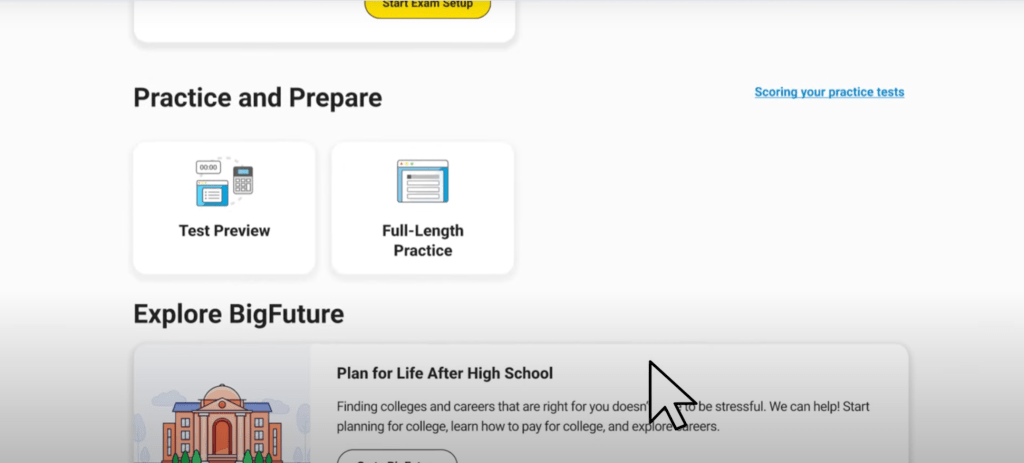
Our advice for students looking to take the SAT or ACT in the near future is to work with a tutor to assess your strengths and weaknesses, and familiarize yourself to the best of your ability with the computer based testing software of the test of your choice. The Collegeboard encourages students to download the testing software, Bluebook, and to familiarize themselves with it well before test day. A limited amount of full-length digital practice tests are available.
 The Circle
[…] Unsure of whether you should tackle the SAT or the ACT? Read more about their differences here. […]
LikeLike