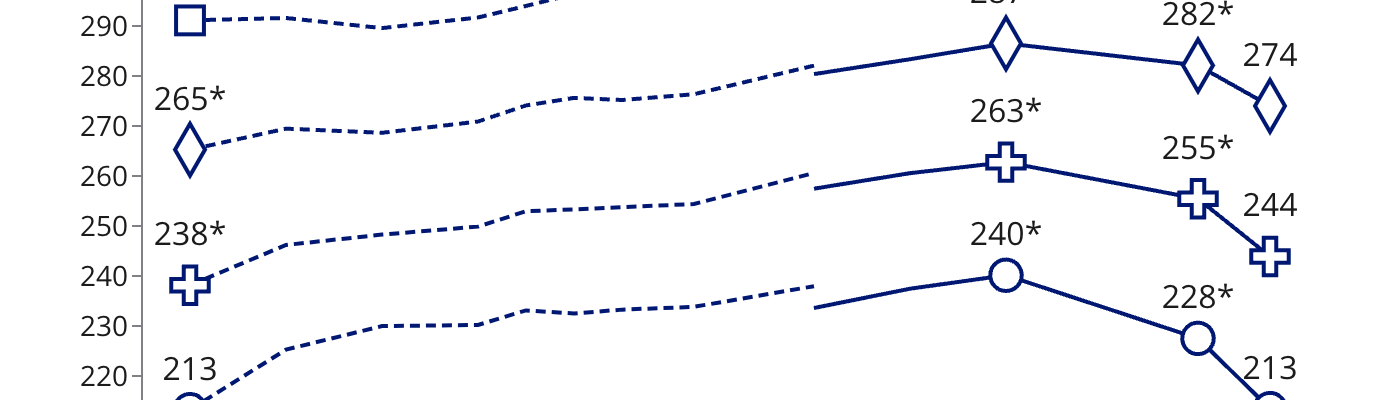

The National Assessment of Educational Progress – AKA The U.S.A’s Report Card – has just released its Long-Term Trend Assessment Results. This particular report has been long-awaited as we are now able to see the longer-term effects of Covid-19 related school closings. During the Covid-19 pandemic, there was a long period of confusion in which teachers were forced to re-design their curriculum at a moment’s notice to function for remote learning. Schools scrambled to ensure that students had the equipment they needed, such as laptops and Chromebooks, to even participate. And some students found online learning simply out of reach, as access to high-speed internet, a quiet place to study, or (especially for the youngest students) the technological know-how to work a computer at all.
What the NAEP found is that all students – regardless of sex, ethnicity, race, or income level – have suffered. The NAEP divides students into many categories, including five achievement percentiles. It didn’t matter whether a student was at the top or the bottom of their class; they are all performing worse than students of the same age three years ago. In fact, the Nation’s Report Card shows that the U.S. is performing worse than it has in decades.

The exact consequences of such a drastic drop in educational achievement are difficult to predict, but it’s clear that none of it will be good. Students are predicted to be less prepared for college, less likely to attend college at all, and lower income earners than their predecessors. This is bad news bears, folks.
Luckily, the NAEP takes the nation’s educational temperature by analyzing data from 13-year-old students. This means that these students still have time to turn it around.
The good news is that with intensive tutoring, students stand a chance. Evidence shows that three or more sessions per week of tutoring over the course of a year can help students catch up on about four to five months’ worth of learning. This is more efficient than public school summer-school programs, which result in only about one month’s worth of learning.
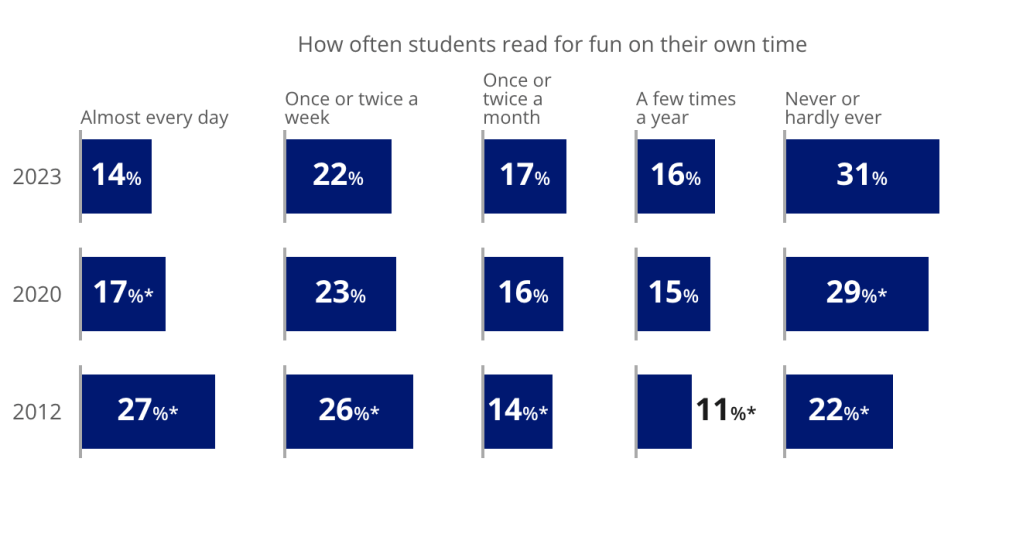
Other ways to ensure that your child is primed to get the most out of their school year is to encourage them to read recreationally. NAEP results show that students in 75th percentile and higher are more likely to read for fun every day than those in the lower percentiles. However, it also shows that fewer students than ever are reading “just for fun” even once or twice a week, and more students than ever are reporting that they “never, or hardly ever” read recreationally. Although this is correlation and not causation, reading recreationally has long been understood to improve many aspects of cognitive ability necessary for student success, including reading comprehension, grammar, spelling, and even empathy.
So what’s our advice?
Playing catch-up is not a game, and the US needs to take broader action to support students at every level. You as a parent can take action for your own child to ensure that they won’t be left behind.
- Think about finding a tutor for your child. Aristotle Circle offers tutoring at both the professional level – where tutors are classroom educators, have advanced degrees, and can assist with learning differences such as ADHD and Dyslexia – and at the peer level. Peer tutors are top-achieving high school and college students that can also act as mentors and role models for your child. One-on-one tutoring is the best, most efficient way to help a student fill in skills gaps and get up to grade level proficiency in both math and reading.
- Read. No matter what age your child is, reading will help them. It is also helpful for you as a parent to be engaged with the material. Whether you are reading a bedtime story to your Kindergartener or discussing the newly re-released Babysitter’s Club books with your 5th grader, talk about the stories you’re reading. It will encourage reading comprehension skills as well as foster curiosity.
- Get help. If your student is struggling, the first place you should go is a parent-teacher conference. No one knows your child better than you, and no one knows how they are performing in class better than their teacher. Work together to create a plan of action to get your child back on track.
With enough hard work, support, and resources, we have high hopes that in 2026, the NAEP results won’t be so bleak.
 The Circle